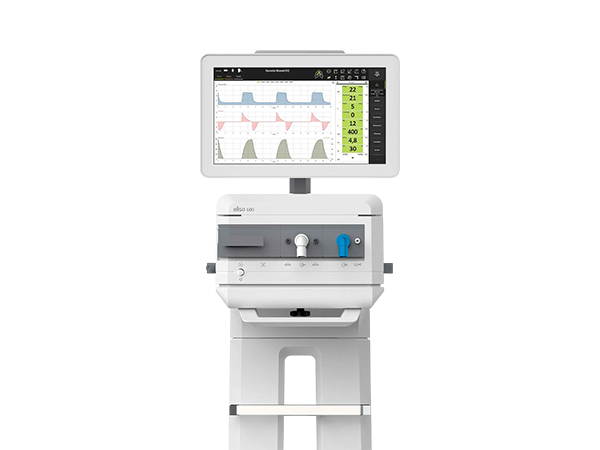
Daily awakening attempts, propofol infusion syndrome, rapid neurological assessment of ventilated patients in intensive care, and reduction of brief reactive psychosis—these are all reasons for using volatile anesthetics in intensive care. We decided to take on this challenge and implemented a comprehensive strategy for "essential safety and performance for anesthesia systems." This encompasses more than just the safe operation of intensive care ventilators and the effects of anesthetic gases on ventilator materials. The Anesthetic function compensates for inspiratory and expiratory resistances in the Anaesthetic Conserving Device (Sedaconda) system, thus preventing a prolongation of mean expiratory time, reducing the risk of air trapping, and ensuring accurate volume measurement.
In combination with the LeoLyzer multi-gas sensor, it is optionally possible to accurately measure and monitor anesthetic gases directly with an ELISA.